
















Skip to content
Products
By Type
By Industry
Applications
A suite of applications built on InterSystems IRIS data platform and optimized to address industry specific challenges.
A FHIR®-enabled care management software solution that allows the entire care team to create and share comprehensive care plans.
A cloud-based, on-demand service delivering near real-time, secure access to patient data from across the nation.
Analytics solution that provides real-time care insights and in-depth analysis for clinical, business, and population health management.
A next-generation enterprise master person index – an automated, easily integrated solution for identity resolution.
A reimagined EHR with built-in GenAI that empowers clinicians, enhances patient experiences, and elevates business operations.
Helps clinicians, care managers, and care teams strengthen coordination, enhance continuity of care, and improve patient engagement in under-served rural areas.
Enables health systems, independent providers, health plans, HIEs, governments and software developers to create a digital front door.
Collects, consolidates, and publishes information about healthcare providers' relationships to patients, health plans, and one another.
A powerful, flexible electronic health record (EHR) that supports all leading health information interoperability standards and profiles.
Enterprise solution supports any clinical lab service, public or private, independent to extensive national laboratory systems.
Low Code Platforms
A suite of low code platforms built on InterSystems IRIS and optimized to address industry-specific challenges.
An aggregated, normalized and deduplicated patient record created from patient data across multiple sources.
A high-availability, high-performance integration engine created specifically for healthcare.
A cloud-based data pipeline and management solution combining FHIR with an out-of-the-box transformation to the CDM and OMOP repository.
One integration that standardizes data exchange between Epic Payer Platform and your clinical and administrative applications.
Interoperability solutions designed to help U.S. health insurers address CMS-0057 and CMS-9115.
Platforms & Components
Versatile foundation supporting a range of solutions, with built-in APIs for integration.
Rapidly access & use FHIR data from diverse sources without the need to create your own FHIR computing infrastructure.
A high-performance data platform designed to make it easy to build applications that support mission-critical processes.
Fully managed cloud-native SaaS offerings that provide customers the fastest time to value for InterSystems data management software.
A digital health data platform that provides the building blocks needed to work with any healthcare data standard, including FHIR.
An AI-enabled supply chain decision intelligence platform that predicts disruptions before they occur, and optimally handles when they do.
Healthcare
InterSystems HL7 FHIR-based technology and solutions power success for organizations across the entire healthcare ecosystem.
A cloud-based, on-demand service delivering near real-time, secure access to patient data from across the nation.
A suite of solutions that work together to capture information, share it in a meaningful way, aid understanding, and drive transformative action.
Analytics solution that provides real-time care insights and in-depth analysis for clinical, business, and population health management.
Rapidly access & use FHIR data from diverse sources without the need to create your own FHIR computing infrastructure.
A high-availability, high-performance integration engine created specifically for healthcare.
A reimagined EHR with built-in GenAI that empowers clinicians, enhances patient experiences, and elevates business operations.
A digital health data platform that provides the building blocks needed to work with any healthcare data standard, including FHIR.
A cloud-based data pipeline and management solution combining FHIR with an out-of-the-box transformation to the CDM and OMOP repository.
One integration that standardizes data exchange between Epic Payer Platform and your clinical and administrative applications.
Interoperability solutions designed to help U.S. health insurers address CMS-0057 and CMS-9115.
Helps clinicians, care managers, and care teams strengthen coordination, enhance continuity of care, and improve patient engagement in under-served rural areas.
A powerful, flexible electronic health record (EHR) that supports all leading health information interoperability standards and profiles.
Enterprise solution supports any clinical lab service, public or private, independent to extensive national laboratory systems.
Financial Services
Enabling firms to transform at scale, so they can increase customer satisfaction, adopt generative AI, maintain compliance, grow revenue, and optimize efficiency.
A high-performance data platform designed to make it easy to build applications that support mission-critical processes.
The fastest way for financial services firms to break down silos and transform disparate data into a single unified resource of actionable information.
Launch new funds, accelerate AI initiatives, automate reporting with a self-service solution tailor-made for asset management firms.
Supply Chain
Empowering organizations with real-time supply chain visibility and the ability to make optimized, real-time, AI-driven decisions.
An AI-enabled supply chain decision intelligence platform that predicts disruptions before they occur, and optimally handles when they do.
A data gateway that speeds and simplifies data access for supply chain applications and practitioners.
Knowledge Hub
Developer Websites
New to InterSystems? Start here, this is your gateway to developer sites, tutorials and more.
Connect, grow, share. The developer community is full of resources, news, and events and a community of people to connect with.
Everything you need to know about our products and more.
Develop. Learn. Share. Network. All with InterSystems Global Masters program where you can join an engaged community of developers.
Experience first hand the community’s dedication to the evolution of our technology with applications.
Education
Get to know InterSystems products and technologies your way, with self-paced online materials and classroom courses.
Online learning presents self-paced materials to help you build and support your organization's most critical applications.
In-person courses maximize learning in a distraction-free environment with face-to-face engagement.
InterSystems proudly supports the free use of InterSystems products for university and college coursework.
View the full list of course offerings and our current course schedule.
Certification
Offers industry-standard exams, flexible testing options, certification badges, and career advancement opportunities demonstrating expertise in InterSystems technologies.
InterSystems Learning Services offers industry-standard certification exams that allow you to prove your mastery of our technology.
Digital credentials that represent the varying levels of achievement you can earn with InterSystems.
Everything you need to know about preparing for, scheduling, and taking InterSystems Exams.
Retake Policies & Support, Beta Exams and more.
Answers to common questions regarding exams, including exam preparation, practice exams, retaking exams, and certifications.
InterSystems Blogs
Explore InterSystems blogs featuring expert insights, industry trends, technology innovations, data management strategies, and thought leadership.
Healthcare industry experts talk about pressing challenges, issues, and trends at the intersection of healthcare and technology.
Addressing various business, data, and technology-related issues for the line of business.
Partners
Partner Programs
Our partners ensure that organizations around the globe are already ready for tomorrow’s opportunities.
Bring together people, processes and technology to deliver solutions that solve complex customer challenges.
Combine your expertise with our proven data, analytics and interoperability capabilities to deliver optimal solutions.
Specialists whose services and guidance ensure consistent, effective delivery of InterSystems technology.
Provide complementary tools and platforms that strengthen and expand our technologies' capabilities.
InterSystems powers data-driven digital startups across healthcare, financial services, and supply chain.
Cloud Partners
InterSystems works with the world's leading cloud providers to give customers the freedom to deploy our technology where it delivers the most value.
The speed, scale, and capabilities of InterSystems and AWS can streamline operations, improve access to data and power breakthrough applications.
InterSystems IRIS and InterSystems IRIS for Health Data Platforms are Preferred Solutions on Azure Marketplace.
InterSystems and Google Cloud empower you to quickly build new apps or modernize existing ones to increase agility and reap the benefits of the multicloud.
InterSystems works with the world’s leading cloud providers - including Amazon Web Services (AWS), Microsoft Azure, Google Cloud, TenCent and Alibaba
Company
About Us
Our technologies provide the connective tissue that transforms disparate data into a single, complete view, enabling better outcomes.
News
News and resources for media including press releases, media kits, tools and more.
The latest news and coverage from our corporate headquarters in Boston, MA.
Core information about InterSystems, our background, our products and technologies, and more.
Please contact Corporate Affairs & Communications regarding media inquiries.
Events
Check out conferences and events we're hosting and attending, and view on-demand content for anything you missed.
Browse our upcoming conference and event schedule to see where we'll be and what we'll be covering.
View our library of on-demand content, including keynote speeches from InterSystems READY, webinars and live event footage.
Watch keynote presentations from InterSystems READY 2026.
Support
Product Support
We provide expert technical assistance to customers 24 hours a day, every day, with support advisors in 15 countries.
Read about support alerts, critical issues, fixes, and product releases.
Access current and previous versions and related notes for InterSystems products.
Contact the WRC for Immediate Help
Documentation
Detailed technical information for InterSystems products, technologies, solutions, and more.
Products
By Type
By Industry
Applications
A suite of applications built on InterSystems IRIS data platform and optimized to address industry specific challenges.
A FHIR®-enabled care management software solution that allows the entire care team to create and share comprehensive care plans.
A cloud-based, on-demand service delivering near real-time, secure access to patient data from across the nation.
Analytics solution that provides real-time care insights and in-depth analysis for clinical, business, and population health management.
A next-generation enterprise master person index – an automated, easily integrated solution for identity resolution.
A reimagined EHR with built-in GenAI that empowers clinicians, enhances patient experiences, and elevates business operations.
Helps clinicians, care managers, and care teams strengthen coordination, enhance continuity of care, and improve patient engagement in under-served rural areas.
Enables health systems, independent providers, health plans, HIEs, governments and software developers to create a digital front door.
Collects, consolidates, and publishes information about healthcare providers' relationships to patients, health plans, and one another.
A powerful, flexible electronic health record (EHR) that supports all leading health information interoperability standards and profiles.
Enterprise solution supports any clinical lab service, public or private, independent to extensive national laboratory systems.
Low Code Platforms
A suite of low code platforms built on InterSystems IRIS and optimized to address industry-specific challenges.
An aggregated, normalized and deduplicated patient record created from patient data across multiple sources.
A high-availability, high-performance integration engine created specifically for healthcare.
A cloud-based data pipeline and management solution combining FHIR with an out-of-the-box transformation to the CDM and OMOP repository.
One integration that standardizes data exchange between Epic Payer Platform and your clinical and administrative applications.
Interoperability solutions designed to help U.S. health insurers address CMS-0057 and CMS-9115.
Platforms & Components
Versatile foundation supporting a range of solutions, with built-in APIs for integration.
Rapidly access & use FHIR data from diverse sources without the need to create your own FHIR computing infrastructure.
A high-performance data platform designed to make it easy to build applications that support mission-critical processes.
Fully managed cloud-native SaaS offerings that provide customers the fastest time to value for InterSystems data management software.
A digital health data platform that provides the building blocks needed to work with any healthcare data standard, including FHIR.
An AI-enabled supply chain decision intelligence platform that predicts disruptions before they occur, and optimally handles when they do.
Healthcare
InterSystems HL7 FHIR-based technology and solutions power success for organizations across the entire healthcare ecosystem.
A cloud-based, on-demand service delivering near real-time, secure access to patient data from across the nation.
A suite of solutions that work together to capture information, share it in a meaningful way, aid understanding, and drive transformative action.
Analytics solution that provides real-time care insights and in-depth analysis for clinical, business, and population health management.
Rapidly access & use FHIR data from diverse sources without the need to create your own FHIR computing infrastructure.
A high-availability, high-performance integration engine created specifically for healthcare.
A reimagined EHR with built-in GenAI that empowers clinicians, enhances patient experiences, and elevates business operations.
A digital health data platform that provides the building blocks needed to work with any healthcare data standard, including FHIR.
A cloud-based data pipeline and management solution combining FHIR with an out-of-the-box transformation to the CDM and OMOP repository.
One integration that standardizes data exchange between Epic Payer Platform and your clinical and administrative applications.
Interoperability solutions designed to help U.S. health insurers address CMS-0057 and CMS-9115.
Helps clinicians, care managers, and care teams strengthen coordination, enhance continuity of care, and improve patient engagement in under-served rural areas.
A powerful, flexible electronic health record (EHR) that supports all leading health information interoperability standards and profiles.
Enterprise solution supports any clinical lab service, public or private, independent to extensive national laboratory systems.
Financial Services
Enabling firms to transform at scale, so they can increase customer satisfaction, adopt generative AI, maintain compliance, grow revenue, and optimize efficiency.
A high-performance data platform designed to make it easy to build applications that support mission-critical processes.
The fastest way for financial services firms to break down silos and transform disparate data into a single unified resource of actionable information.
Launch new funds, accelerate AI initiatives, automate reporting with a self-service solution tailor-made for asset management firms.
Supply Chain
Empowering organizations with real-time supply chain visibility and the ability to make optimized, real-time, AI-driven decisions.
An AI-enabled supply chain decision intelligence platform that predicts disruptions before they occur, and optimally handles when they do.
A data gateway that speeds and simplifies data access for supply chain applications and practitioners.
Knowledge Hub
Developer Websites
New to InterSystems? Start here, this is your gateway to developer sites, tutorials and more.
Connect, grow, share. The developer community is full of resources, news, and events and a community of people to connect with.
Everything you need to know about our products and more.
Develop. Learn. Share. Network. All with InterSystems Global Masters program where you can join an engaged community of developers.
Experience first hand the community’s dedication to the evolution of our technology with applications.
Education
Get to know InterSystems products and technologies your way, with self-paced online materials and classroom courses.
Online learning presents self-paced materials to help you build and support your organization's most critical applications.
In-person courses maximize learning in a distraction-free environment with face-to-face engagement.
InterSystems proudly supports the free use of InterSystems products for university and college coursework.
View the full list of course offerings and our current course schedule.
Certification
Offers industry-standard exams, flexible testing options, certification badges, and career advancement opportunities demonstrating expertise in InterSystems technologies.
InterSystems Learning Services offers industry-standard certification exams that allow you to prove your mastery of our technology.
Digital credentials that represent the varying levels of achievement you can earn with InterSystems.
Everything you need to know about preparing for, scheduling, and taking InterSystems Exams.
Retake Policies & Support, Beta Exams and more.
Answers to common questions regarding exams, including exam preparation, practice exams, retaking exams, and certifications.
InterSystems Blogs
Explore InterSystems blogs featuring expert insights, industry trends, technology innovations, data management strategies, and thought leadership.
Healthcare industry experts talk about pressing challenges, issues, and trends at the intersection of healthcare and technology.
Addressing various business, data, and technology-related issues for the line of business.
Partners
Partner Programs
Our partners ensure that organizations around the globe are already ready for tomorrow’s opportunities.
Bring together people, processes and technology to deliver solutions that solve complex customer challenges.
Combine your expertise with our proven data, analytics and interoperability capabilities to deliver optimal solutions.
Specialists whose services and guidance ensure consistent, effective delivery of InterSystems technology.
Provide complementary tools and platforms that strengthen and expand our technologies' capabilities.
InterSystems powers data-driven digital startups across healthcare, financial services, and supply chain.
Cloud Partners
InterSystems works with the world's leading cloud providers to give customers the freedom to deploy our technology where it delivers the most value.
The speed, scale, and capabilities of InterSystems and AWS can streamline operations, improve access to data and power breakthrough applications.
InterSystems IRIS and InterSystems IRIS for Health Data Platforms are Preferred Solutions on Azure Marketplace.
InterSystems and Google Cloud empower you to quickly build new apps or modernize existing ones to increase agility and reap the benefits of the multicloud.
InterSystems works with the world’s leading cloud providers - including Amazon Web Services (AWS), Microsoft Azure, Google Cloud, TenCent and Alibaba
Company
About Us
Our technologies provide the connective tissue that transforms disparate data into a single, complete view, enabling better outcomes.
News
News and resources for media including press releases, media kits, tools and more.
The latest news and coverage from our corporate headquarters in Boston, MA.
Core information about InterSystems, our background, our products and technologies, and more.
Please contact Corporate Affairs & Communications regarding media inquiries.
Events
Check out conferences and events we're hosting and attending, and view on-demand content for anything you missed.
Browse our upcoming conference and event schedule to see where we'll be and what we'll be covering.
View our library of on-demand content, including keynote speeches from InterSystems READY, webinars and live event footage.
Watch keynote presentations from InterSystems READY 2026.
Support
Product Support
We provide expert technical assistance to customers 24 hours a day, every day, with support advisors in 15 countries.
Read about support alerts, critical issues, fixes, and product releases.
Access current and previous versions and related notes for InterSystems products.
Contact the WRC for Immediate Help
Documentation
Detailed technical information for InterSystems products, technologies, solutions, and more.
Search to learn about InterSystems products and solutions, career opportunities, and more.
Abstract data representation

Generative AI in Healthcare: Revolutionizing Patient Care and Diagnosis

Explore how generative AI in healthcare is revolutionizing patient care, diagnosis, and drug discovery. Learn about its applications, benefits, and ethical considerations.

In 2024, a study by Washington University School of Medicine and tech startup Whiterabbit.ai found that AI may be able to detect early cases of breast cancer, as well as reduce false positives.

The company trained an AI model on 12,248 2D digital mammograms (6,161 showing cancer). They then tested the model against several real-world mammograms.

The study found that out of the 10,000 people who had mammograms, over 260 of them could have avoided diagnostic exams and 10 could have avoided biopsies using AI systems to help diagnose the presence of cancer.

Generative AI and large language models (LLMs) are rapidly transforming the healthcare landscape as we know it, offering innovative solutions to longstanding challenges. This paradigm-shifting technology has the potential to revolutionize patient care, streamline operations, and improve medical research.

This is the future of our healthcare system, and it's only the beginning.

In this comprehensive article, we'll dive deep into this new and exciting frontier and explore how ethical generative AI integration can aid in quality healthcare delivery and patient care.

Doctor holding tablet, consulting with female patient on results, medical info and healthcare

Key Takeaways

  • Generative AI has the potential to revolutionize healthcare through automation and improved clinical applications.
  • Healthcare leaders are actively adopting generative AI tools to improve patient experiences and streamline operations.
  • Generative AI integration in healthcare presents opportunities for improved outcomes but also raises ethical and privacy concerns. Every organization needs to consider these in their journey to adopting generative AI.

What is Generative AI in healthcare?

You've likely seen how GPT-4 (often known by its more popular chat interface, ChatGPT) has disrupted industries worldwide. You may have even seen generative AI models like Flux and Midjourney create AI portraits that are almost indistinguishable from real-life photographs.

But this technology isn't just for creating art or generating intelligent text responses for corporate chat bots.

Generative AI in healthcare can automate administrative tasks, improve clinical applications, and ultimately lead to better patient outcomes.

Healthcare leaders are actively pursuing or planning to implement generative AI tools to enhance patient experiences and improve their operations.

As the healthcare industry embraces generative artificial intelligence, it faces both opportunities and challenges. While the technology promises to improve efficiency and accuracy in many areas, concerns about data privacy, ethical considerations, and regulatory compliance must be addressed.

Large language models (LLMs) have existed for decades, they've only recently burst into the mainstream. This chain reaction of popularity was most certainly ignited by OpenAI's landmark release of ChatGPT in late 2022.

That means the impact these technologies can have on healthcare remains poorly understood or misguided.

What's Special About Generative AI in Healthcare?

Traditionally, the healthcare industry has been relatively slow to adopt AI, except for specific areas such as radiology.

Because healthcare is a regulated industry with life-and-death decisions, it's appropriate that changes are made in a careful and measured way.

Healthcare is experiencing a crisis-level labor shortage. Doctors, nurses, and staff are chronically overworked, still recovering from the pandemic, and stressed with the amount of administration and paperwork required by law.

Clinicians often talk about "pajama time" – time spent after work hours updating charts, keeping up with patient email, and doing administration. These tedious (but necessary) tasks in healthcare are especially well-suited to generative AI technologies.

So even with its high levels of regulation, this industry is one of the top adopters of generative AI and is eager for even more AI applications – so long as they’re implemented ethically, safely, and sustainably.

Foundations of Generative AI in Healthcare

a surgeon putting a mask on to prevent infection before surgery

Generative AI isn't a "ghost in the machine" composing new information out of thin air. Rather, it uses vast datasets to create new content, help in diagnosis, and enhance treatment planning.

AI Technologies in Medicine

AI technologies in medicine encompass a wide range of applications.

Here's just a sampling of what's possible:

  • Machine learning algorithms can analyze patient records to predict disease risks and recommend personalized treatments.
  • Computer vision systems interpret medical imaging, helping radiologists in detecting abnormalities.
  • Natural language processing (NLP) extracts valuable information from clinical notes and medical literature.
  • Robotics and AI combine to improve surgical precision and automate repetitive tasks.
  • Virtual and augmented reality powered by AI provide immersive training experiences for medical students and professionals.
  • AI-driven chatbots and virtual assistants improve patient engagement and provide round-the-clock support for basic health queries.
  • AI-powered agents and applications automate much of the routine work in record-keeping and patient correspondence for clinicians, 

And much, much more. Let's explore some of these applications in more depth.

Applications of Generative AI

According to a survey we conducted at one of our healthcare events, many organizations believe generative AI is a powerful, but‌ challenging technology with an almost infinite number of use cases.

These include innovative applications in diagnosis, treatment, personalized care, and drug development.

How to Use AI to Improve Patient No Show Rates

Diagnosis and Treatment Enhancement

Generative AI models are revolutionizing medical imaging analysis, improving diagnostic accuracy and speed. AI algorithms can detect subtle abnormalities in X-rays, MRIs, and CT scans that human eyes might miss.

In radiology, AI assists in identifying early signs of diseases like cancer or cardiovascular conditions. This leads to earlier interventions and improved patient prognoses.

Natural language processing capabilities enable AI to analyze vast amounts of medical literature and patient records. This helps healthcare providers make more informed treatment decisions based on the latest research and similar case histories.

AI-powered systems can also generate treatment plans tailored to individual patients. These plans consider factors like genetic makeup, medical history, and lifestyle to optimize therapeutic approaches.

Rear view of male and female MRI technologist sitting at the console in the operating room and operating the MRI scanner

Personalized Patient Care

Generative AI is enhancing personalized care by analyzing patient data to predict health risks and recommend preventive measures. AI models can process diverse data types, including genetic information, to create individualized health profiles.

Chatbots and virtual assistants powered by generative AI provide 24/7 support to patients. They answer questions, offer medication reminders, and provide general health advice.

AI algorithms can generate personalized nutrition and exercise plans based on a patient's health status, goals, and preferences. This tailored approach improves adherence to healthy lifestyle recommendations.

In mental health care, AI-powered tools can analyze speech patterns and text to detect early signs of conditions like depression or anxiety. This enables timely interventions and support.

RAG vs Fine-tuning vs Prompt Engineering: Everything You Need to Know


Drug Discovery and Development

Generative AI is accelerating drug discovery processes by predicting potential drug candidates and their interactions with biological targets. AI models can generate and screen millions of molecular structures, significantly reducing the time and cost of early-stage drug development.

Machine learning algorithms analyze vast datasets of chemical compounds, biological pathways, and clinical trial results. This helps researchers identify promising drug candidates and predict their efficacy and potential side effects.

AI-powered simulations can model drug interactions within the human body, allowing researchers to optimize dosages and formulations before clinical trials begin. This improves the success rate of drug development and reduces risks for trial participants.

In clinical trials, generative AI aids in patient selection and monitoring. It can identify suitable candidates based on specific criteria and predict potential adverse reactions, enhancing trial safety and efficiency.

Integrating AI with Healthcare Data

A big benefit of generative AI is that it can process a lot of data and find solutions that humans would be unable to find.

Integration between healthcare data and generative AI models is the key to improving patient care, streamlining workflows, and uncovering valuable insights from complex datasets.

Electronic Health Records (EHRs)

EHRs serve as a cornerstone for AI integration in healthcare. These digital records contain comprehensive patient information, including medical histories, lab results, and treatment plans.

AI algorithms can look at EHRs to find patterns and trends (including text and image data) that may not be clear to human doctors right away. This analysis can help predict potential health risks and suggest personalized treatment options.

Healthcare organizations are increasingly adopting AI-powered tools to extract meaningful information from unstructured EHR data. These tools can automatically categorize and summarize clinical notes, making it easier for medical professionals to quickly access relevant patient information.

Most EHR vendors, realizing the significance of the current AI gold rush, are hurriedly adding gen-AI-powered features to their systems. These allow for the following benefits:

  • Easier navigation
  • Hands-free interaction (voice recordings of patient interactions are mined for content and formatted)
  • Better insight in clinical decision-making

AI-powered startups for healthcare were also one of the top categories for startup funding in 2024.

medical staff using digital tablet to review medical chart

Data Analytics and Patterns

AI excels at processing large volumes of healthcare data to uncover patterns and make predictions. Advanced analytics techniques can identify correlations between various health factors, leading to improved diagnostics and treatment strategies.

Machine learning algorithms can analyze diverse datasets, including:

  • Patient demographics
  • Medical histories
  • Lab results
  • Imaging studies
  • Genetic information

By examining these datasets, AI systems can detect subtle patterns that may indicate early signs of diseases or predict patient outcomes. This capability enables healthcare providers to implement proactive interventions and personalized treatment plans.

AI-driven predictive analytics also help healthcare organizations optimize resource allocation and improve operational efficiency. These tools can forecast patient admissions, identify high-risk patients, and suggest preventive measures to reduce hospital readmissions.

Ethics, Privacy, and Regulation

Generative AI in healthcare raises critical concerns around fairness, data protection, and governance. Addressing these issues is essential to ensure responsible implementation and maintain public trust in AI-powered medical technologies.
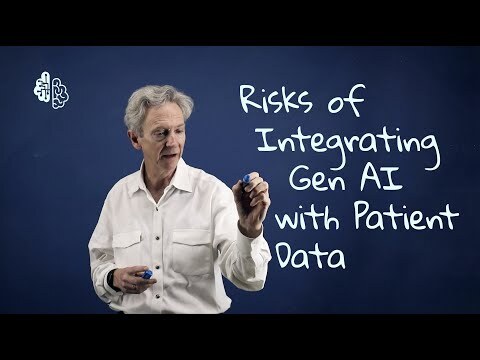
Risks of Integrating Gen AI with Patient Data

Addressing Bias and Equity

AI systems can perpetuate existing biases in healthcare data and practices. To mitigate this, developers must use diverse and representative training datasets. Regular audits of AI outputs help identify and correct biases.

Ethical AI development requires multidisciplinary teams including ethicists, clinicians, and patient advocates. This ensures AI tools consider varying perspectives and needs.

Equity in AI access is crucial. Healthcare providers should implement AI solutions that serve diverse patient populations, not just those with the most resources.

Patient Privacy and Data Security

Protecting patient privacy is paramount when using AI in healthcare. Strict data anonymization and encryption protocols must be enforced.

AI systems often require large datasets for training and operation. Healthcare organizations must implement robust cybersecurity measures to prevent data breaches.

Informed consent processes need updating to account for AI use. Patients should understand how their data may be used in AI systems and have the right to opt-out.

Male nurse showing digital tablet to mother with toddler in hospital

Regulatory Considerations

Governments worldwide are wrestling with how to best regulate AI. ‌The FDA is developing frameworks to evaluate and manage AI-based medical devices. This includes guidelines for continuous monitoring and updating of AI algorithms.

The EU AI Act proposes strict rules for high-risk AI applications, including many in healthcare. It emphasizes transparency, human oversight, and accountability.

Liability issues in AI-assisted healthcare decisions remain complex. Clear guidelines are needed to determine responsibility when AI contributes to medical errors.

International cooperation is essential to create harmonized AI regulations. This ensures consistent standards and facilitates global development and deployment of healthcare AI.

Beyond governmental regulation, there are also multiple industry consortia focused on appropriate use of AI in healthcare, notably CHAI (Coalition for Health AI) and TRAIN (Trustworthy & Responsible AI Network).

Healthcare organizations are quickly adding AI to their rules and policies. Many of them are creating a Chief AI officer role or adding this to the Chief Data Officer's duties.

Challenges and Limitations

Generative AI in healthcare faces significant hurdles in technical capabilities and market acceptance. These challenges impact both the technology's effectiveness and its adoption in medical settings.

AI Hallucinations

Many high-stakes industries have been hesitant to implement generative AI models like GPT-4 and others for one glaring reason: AI hallucinations.

AI hallucinations happen when models generate false or nonsensical data, which obviously poses serious risks in medical contexts.

As models continue to improve, these hallucinations will become less and less prevalent, and there are ways to mitigate hallucinations with programmatic guardrails, such as:

  • Fact-checking mechanisms: implementing systems that cross-reference AI-generated information with verified medical databases. Sometimes these are called "grounding" mechanisms.
  • Human-in-the-loop approaches: ensuring that AI outputs are reviewed by healthcare professionals before being used in patient care.
  • Confidence thresholds: only accepting AI-generated content when the model's confidence level exceeds a predetermined threshold.
  • Multi-model consensus: using multiple AI models and only accepting outputs where there's agreement among them.

The Case for a "Slow Roll" Approach

Given these limitations, it may be ideal to "slow roll" generative AI applications in health systems, beginning with lower-risk applications such as:

  1. Administrative tasks: using AI for scheduling appointments, managing patient records, and handling billing inquiries.
  2. Patient education: generating personalized educational materials about conditions and treatments.
  3. Triage chatbots: implementing AI-powered chatbots to guide patients to appropriate care levels without making diagnoses.
  4. Research assistance: using AI to summarize medical literature and identify potential areas for further study.
  5. Medical coding: employing AI to assist in accurate and efficient medical coding for billing purposes.

By starting with these lower-risk applications, healthcare systems can:

  • Build confidence in AI systems
  • Develop robust protocols for AI implementation
  • Gradually train staff on AI integration
  • Identify and address potential issues before moving to higher-risk applications

As trust and capabilities grow, AI can be incrementally introduced into more critical areas of healthcare, always maintaining a strong focus on patient safety and ethical considerations.

Mature scientist with colleague using laptop

Many of these lower-risk applications also provide major benefits to healthcare systems, so this slow-roll approach isn't truly a compromise.

By aiming at improving the clinician experience and reducing "pajama time," organizations can use a lower-risk, human-in-the-loop approach and simultaneously deliver major benefits.

Market and Adoption Barriers

Healthcare institutions face obstacles in integrating generative AI into existing systems. High implementation costs and the need for specialized infrastructure discourage many organizations from adopting these technologies.

Regulatory uncertainties surrounding AI in healthcare create hesitation among potential adopters, and concerns about liability and accountability for AI-driven decisions slow market growth.

Healthcare professionals may resist AI adoption due to fears of job displacement or loss of autonomy in decision-making. This resistance can significantly impede the integration of generative AI into clinical workflows.

Patient trust is another critical factor. Many individuals remain skeptical about AI involvement in their healthcare, preferring human interaction and judgment over machine-generated insights.

The Future of AI in Healthcare

Artificial intelligence is poised to revolutionize healthcare through predictive modeling and strategic collaborations. These developments promise to improve patient care, streamline operations, and accelerate medical research.

Predictive Models and Prognostics

AI-powered predictive models are set to transform healthcare decision-making. These tools will analyze vast amounts of patient data to forecast health outcomes and identify potential risks. For example, AI platforms may predict the likelihood of hospital readmissions or disease progression.

Machine learning algorithms will continue to improve, enabling more accurate diagnoses and personalized treatment plans. AI tools will help in interpreting medical imaging, potentially detecting diseases earlier than human clinicians.

business people using digital tablet in office

Strategic Partnerships and Collaboration

Healthcare organizations are forming strategic partnerships with tech companies to leverage AI expertise. These collaborations aim to develop innovative AI solutions tailored to healthcare needs.

OpenAI and similar organizations are working with medical institutions to create specialized AI models for healthcare applications. These partnerships focus on developing AI that can understand complex medical terminology and assist in clinical decision-making.

Startups are emerging with AI-powered mobile apps designed for both patients and healthcare professionals. These apps may offer symptom checkers, medication reminders, and virtual health assistants.

Large pharmaceutical companies are collaborating with AI firms to accelerate drug discovery and development processes. AI tools are being used to analyze molecular structures and predict drug efficacy,‌ reducing the time and cost of bringing new treatments to market.

Generative AI and Mental Health

Generative AI has applications for both the body and the mind. LLMs have the potential of revolutionizing mental healthcare by providing innovative tools for diagnosis, treatment, and patient support.

This technology offers promising solutions to enhance therapeutic interventions and streamline mental health practices.

Supporting Mental Health Practices

Generative AI models are being developed to assist in diagnosing mental health conditions. These models analyze patient data, including verbal responses and behavioral patterns, to provide clinicians with valuable insights.

A study published in Nature suggests a three-step approach using generative AI for recognizing, expressing, and managing emotions.

One key insight is the potential for AI to create personalized visual aids, helping patients, especially children, to better identify and express their emotions. For example, AI could generate custom images depicting various emotional states, making abstract concepts more tangible and relatable.

Two women sitting and talking while holding hands.

The study also emphasizes the importance of cultural sensitivity in AI-generated content, recognizing that emotional expression can vary significantly across cultures. This underscores the need for diverse and inclusive training data for AI models used in mental health applications.

Researchers propose that GAI could augment existing evidence-based therapies like Cognitive Behavioral Therapy (CBT), Dialectical Behavior Therapy (DBT), and Acceptance and Commitment Therapy (ACT) by providing tailored visual tools and personalized content.

As the field evolves, there's potential for integrating GAI with other technologies like virtual and augmented reality, opening up possibilities for more immersive and personalized therapeutic experiences.

Final Thoughts

The integration of generative AI in healthcare is ushering in a new era of patient care and diagnosis, with platforms like InterSystems IRIS playing a pivotal role in this transformation.

As we explore the full potential of AI technologies, it's clear that robust data management and integration solutions are essential for success.

By providing seamless interoperability, advanced analytics, and strong security features, InterSystems IRIS empowers healthcare organizations to harness the full potential of AI while ensuring data privacy and regulatory compliance.

Learn more about how InterSystems IRIS can help you ethically integrate generative AI into your healthcare organization by contacting us today.

Frequently Asked Questions

How is generative AI transforming medical diagnostics and patient care?
Generative AI is enhancing medical imaging analysis, enabling more accurate and faster diagnoses. It can generate detailed 3D models from 2D scans, aiding in surgical planning and patient education.

AI-powered chatbots are improving patient engagement and providing 24/7 support for basic health inquiries. These systems can automate administrative workflows, freeing up healthcare professionals to focus on complex patient care tasks.
What are the potential risks and challenges associated with implementing generative AI in healthcare settings?
Data quality and bias remain significant concerns. AI models trained on limited or biased datasets may produce inaccurate or unfair results, potentially leading to misdiagnoses or inappropriate treatments.

Regulatory compliance and liability issues pose challenges. Healthcare organizations must navigate complex regulations to ensure AI systems meet safety and efficacy standards.
In what ways can generative AI support the drug discovery and development process?
Generative AI accelerates drug discovery by predicting molecular structures and interactions. It can design novel compounds with specific properties, potentially reducing the time and cost of bringing new drugs to market.

AI models can simulate clinical trials, helping researchers identify potential side effects and optimize dosing regimens before human testing begins.
How do data privacy concerns impact the application of generative AI in healthcare?
Protecting patient privacy is paramount when implementing generative AI in healthcare. Strict data anonymization and encryption protocols are essential to comply with regulations like HIPAA.

Healthcare organizations must carefully manage patient consent and data access. Transparent AI systems that explain their decision-making process can help build trust with patients and providers.
What advancements in generative AI are expected to have the most significant impact on healthcare by 2025?
Improved natural language processing is expected to revolutionize clinical documentation and patient communication. AI systems may generate comprehensive medical reports and translate complex medical jargon for patients.

Advanced predictive models could enable early disease detection and personalized risk assessments based on genetic and lifestyle factors.
How is generative AI influencing the personalization of patient treatment plans?
Generative AI analyzes vast amounts of patient data to create tailored treatment recommendations. It can consider factors like genetic makeup, lifestyle, and treatment history to suggest optimal therapies.

AI-driven systems can adapt treatment plans in real-time based on patient responses and new medical research. This dynamic approach may lead to better outcomes and reduced side effects.

Related Content

Mar 01, 2024
A summary of feedback and discussion points regarding GenAI in healthcare gathered at ViVE24.
Global Head of Healthcare Market Strategy
Mar 25, 2024
Build generative AI applications with embedded vector search capabilities on InterSystems IRIS. Search structured and unstructured data, add semantics, and overcome the limitations of LLMs.
Feb 15, 2024
Complete this survey to view the results for trends on where your fellow Health IT leaders are going.

Take The Next Step

We’d love to talk. Fill in some details and we’ll be in touch.
*Required Fields
Highlighted fields are required
*Required Fields
Highlighted fields are required

By submitting your business contact information to InterSystems through this form, you acknowledge and agree that InterSystems may process this information, for the purpose of fulfilling your submission, through a system hosted in the United States, but maintained consistent with any applicable data protection laws.


** By selecting yes, you give consent to be contacted for news, updates and other marketing purposes related to existing and future InterSystems products and events. In addition, you consent to your business contact information being entered into our CRM solution that is hosted in the United States, but maintained consistent with applicable data protection laws.