



























Rural communities around the world face a persistent and growing healthcare crisis — workforce shortages, fragmented data, limited digital infrastructure, and the stark reality that people in remote areas live measurably shorter, less healthy lives than those in urban centers. In this panel discussion from InterSystems READY 2026, four healthcare leaders from the U.S., England, and Australia share what it actually takes to close that gap.
Dr. Thomas Keane (National Coordinator for Health Information Technology, HHS), Ben Turrell (CEO, Big Sky Care Connect in Montana), Dr. Tim Ferris (former National Director of Transformation, NHS England), and Dr. Andrew Bell (Chief Clinical Information Officer, Northern Territory Health, Australia) draw on decades of firsthand experience to discuss what works, what doesn't, and what's next.
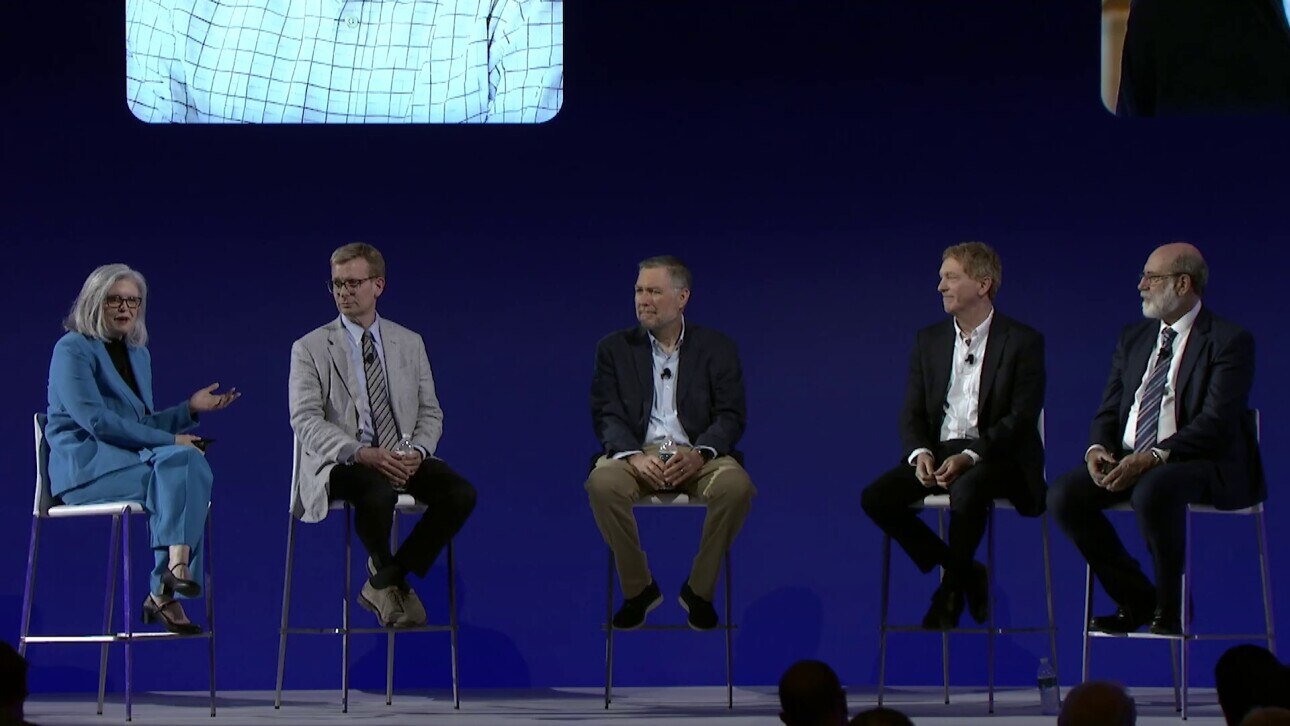
Panelists:
- Dr. Tom Keane, National Coordinator for Health Information Technology, HHS
- Ben Tyrrell, CEO Big Sky Care Connect
- Dr. Tim Ferris, Vice President, Healthcare Practice, InterSystems
- Dr. Andrew Bell, Chief Clinical Information Officer, Norther Territory Health, Australia
Moderator:
- Julie Smith, Director of Healthcare Strategy, InterSystems
Video Transcript
Below is the full transcript of the READY 2026 Keynote.
Thank you for joining us back in the room and we have the honor of talking about rural health transformation and as part of that we need to acknowledge that has become an increasing health care priority not just in the US but around the globe and the reason for that is that because we know it is not just policy that can make a difference not just funding but it actually takes a whole community working together in order to affect change and the challenges are real Right. Rural health has dealt with challenges around workforce shortages, fragmented data, limited digital infrastructure, and the realities of trying to deliver care from siloed organizations with siloed information. And yet, there's opportunity and there is a path forward. And we have the privilege this morning of having leaders from around the world joining us on this panel to help us understand what works, what doesn't, what they've learned from their experiences in the field. And so I'm thrilled to welcome them. We have Dr. Tom Keane, Ben Terrell, Dr. Tim Ferris, and Dr. Andrew Bell. And I'm going to start with you, Dr. Keane. Please take a few minutes to share with us what your role is now, the experience and perspective you bring to the table and how you think about rural transformation overall.
Read the full transcript
Thank you and thank you all for coming and inviting me. It's an honor to be here. I am the national coordinator for health information technology. Until two weeks ago, I was called the assistant secretary for technology policy national coordinator for health information technology. And I insisted that anybody who met me would actually call me by my full title. However, a couple of weeks ago at our at our direction, we underwent a reorganization and now I'm the national coordinator for health information technology.
And what I do is regulate health information technology and there's three levers that we really have for that. The first is standards. We promulgate standards that health information technology and health information exchange occur by. Certification is our program by which we certify health information technology. So if you're a hospital or a provider and you use certified health information technology, you can get special incentives in the government payment programs. And then there's exchange. We support the exchange of health information both by managing a health information exchange known as TEFKA and by funding health information exchanges and by setting up standards for exchange.
And a little bit about how I got into this. When I was in medical school the medical school had me do a rural rotation and I got the bug. I did a rotation at Mary Basset Hospital in Coopertown, New York and in the middle of winter and it was absolutely wonderful. The care that was provided to the local patients was exceptional. The doctors all had collegial relationships with each other and the hospital I think was very supportive and responsive to the provers's needs. So I decided I would be a rural practitioner.
Fast forward a few years later when I finished training I moved to Zanesville, Ohio and I'm an interventional radiologist. So I was the first interventional radiologist in multiple counties in rural southeast Ohio and worked in Kosakton, Cambridge, Galipolis and Zanesville. I worked there for six years and then I got to see firsthand the challenges that rural hospitals face. One of the hospitals went bankrupt and if you've ever worked at a hospital that is in the process of going through a bankruptcy, it's really something else. Another hospital outright closed. A third hospital was acquired by a larger system and became a spoke in the hub and spoke model that took over a lot of rural care and the fourth hospital 227 bed hospital is still an independent hospital still in existence.
my radiology practice because of the fragmentation of the hospitals that we covered essentially dissolved and most of us moved to large cities. I moved Chicago and actually went to work for a inner city practice and the same thing that happened in rural areas. The same financial challenges, same issues with fragmentation, same issues with large systems gobbling up small systems happened there. And after this happened to two of the practices I was in, I said I'd like to learn a little bit more about the architecture of the health care system. I had been doing government work since my time in training and so leveraged that to go into government full-time in 2018. Spent five years in government full-time in which I did work on rural issues. I left to return to the full-time practice of medicine for two years and then was asked to lead one of the agencies that I worked at back in June of 2025. So that's kind of what I do and how I got to where I am.
>> Thanks so much. And Ben,
>> sure.
>> great to be here. I'm Ben Tur. I'm the CEO of Big Sky Care Connect in the great state of Montana. I start a little bit and give you a sense of our state. So we're the fourth largest state in the country. We cover a geographic region that would span Chicago to here in Washington DC to Raleigh, North Carolina to Nashville, Tennessee. We have a population of just over 1.1 million people. And we do in fact have more cows than people in our state. So about twice as many cows as people.
Our state has 62 hospitals, 47 of which are critical access hospitals. By comparison, the metro Chicago area has 47 hospitals. And if you take that geographic span I mentioned before, there's about 750 hospitals in that space. Montana is also home to 12 federally recognized tribal communities organized across eight tribal nations and seven reservations. And those communities are served by a combination of Indian health services, urban Indian services and tribal health providers.
80% of our counties are designated as frontier which means we have less than six people per square mile. 90% of our counties are designated as health shortage, professional shortage areas. And finally, Montana is home to the recognized middle of nowhere. So, the Washington Post did a study a few years ago and looked for the most isolated but settled community in the country. And Glasgow, Montana was selected as the most isolated community. And as a matter of fact, Montana is home to the three most isolated communities in the country.
I've had the distinct pleasure in two parts of my life to live in vastly different rural communities. The first 10 years of my life, I lived in the west coast of Ireland in a small village where our home was a half mile from the nearest other house. And then the last 15 years I've lived in the largest city in the state of Montana in Billings. In between I spent the rest of my life living in large urban areas around Boston, Chicago and actually in Baltimore. So it's critical as we embark on this endeavor to work with rural communities and endeavor to improve the outcomes and lives of those who live and work in those communities that we remember rural communities are not all the same. They have unique needs and challenges.
And serving the needs of those who live in Montana on the Highline, which is a community along the Canadian border, is vastly different than serving communities in rural areas that are in closer proximity to large urban areas. Our high-line communities are several hours away from a what we would consider a metropolitan area in Billings or Great Falls. And you're talking hours of driving in the best case scenario on a dark two-lane road. Hopefully the weather is not horrible and you can actually drive on the roads in those times.
Our organization was founded in 2018 as an independent nonprofit with a vision of creating healthy Montana communities by harnessing health care information and using that in a powerful way to leverage and support our providers across the state. We went live with our first data exchange and data partnerships in 20 the end of December of 2020 and we now engage in partnership with over 80% of the hospitals in our state, 90% of the federally qualified health centers and a expanding network of other diverse provider communities and critical health care organizations that serve patient populations across our state.
We believe we have active clinical data now on over 90% of the population of our state. And our network and services have developed over these past five years through an ongoing and active collaboration of building trust with the various stakeholders and communities that we serve. And it is in building that trust and building those relationships that I think is critical as we move forward in the rural health work that we are doing.
Building that trust in our services and in the stewardship of the data we are privileged to hold and are responsible for has taken a lot of effort and time and persistence and that is the work that will be critical for us as we move forward.
>> Thanks Ben. >> Great. Hi I'm Tim Ferrris. I'm a physician primary care doctor. And maybe I'm the token urban guy on the panel because I spent my entire professional career in Boston. But I also want to I do have some rural health experience before in fact my decision to go to medical school was inspired by working as a village health worker in Nepal u for six months and it was an extraordinarily eye-opening experience to as an emergency medical technician take care of people who were suffering and dying from things that I knew could be helped if they had the right people, equipment and information available to them.
And fast forward, I was very fortunate to be the national director of transformation for England in the National Health Service in England. And one of the best parts of my job was traveling throughout the country to visit trusts. It's an interesting word, trust. A trust is the designation that the English have called a an institution that delivers a health care service. And it's a wonderful to use that word trust, right? You Ben, you just spoke about the importance of trust.
Well, some of the trusts that I visited in rural England were extraordinary institutions that I made a point of getting politicians to come visit because there are examples out there of extremely well functioning organizations in rural settings that are doing everything right. And we need to highlight those, which I did by bringing politicians to see this is what it could look like if we get everything right. Those organizations, we need those organizations as beacons to help guide the way for the extraordinary depth and breadth of the need across not just our country but internationally.
And speaking of international, >> thank you I'm Andrew Bell. I'm the chief clinical information officer of the Northern Territory Health Department. But first and foremost, I'm a country person. I grew up in a country town of about a thousand people. And I've spent all my life living in Darwin's the biggest place I've ever settled apart from training which is 150,000 people. But I moved to the Northern Territory in 1991 when some of the communities didn't even have telephones. And became and most of my career has been involved in First Nations health or Aboriginal health and along the way I went there was what we now call a rural generalist which is we used to just call the country doctor a GP with extended skills and along the way did a public health fellowship and also got involved in clinical informatics.
Northern Territories are twice the size of Texas and has a population of 250,000. So it's a very scattered population with vast distances and wanted to first talk about the myth I grew up with. I grew up in a country town and it had a population of about a thousand people as I said and my parents imbued in me that the healthiest and best place to live was in the country and that was certainly true a century ago London in 1840 the 1840s had a life expectancy at birth of 23 mostly driven by the fact that 30 to 50% of children died before the age of five and in those days if who are wealthy like the Dar Charles Darwin's family, you moved out to the countryside to raise your family. This is obviously a persistent idea, but I thought what I'd do is present to you the statistics from the Australian Institute of Health and Welfare, which has very good data on health gradients in Australia.
And this shows from it's it's disability adjusted life years and from our urban centers to our most remote areas we have a loss of life expectancy of a decade and a half. So if you live in our most remote areas you live 15 years shorter life than in our urban centers which is quite a dramatic inequality in health in a first world country. The next slide which oh sorry I've got to change my slides. Sorry.
this slide demonstrates the causes of this increased mortality. You see the big one there is cardiovascular disease but it's a it's a collection of preventable chronic diseases, kidney disease, diabetes and also accidented injury. And there's a paradox there in that the expanded version of this graph would show you that anxiety disorders are actually lower in the country but the suicide rate and self harm rate is higher which I think reflects access to diagnosis and inaccessible of inaccessibility of services and telly it's not surprising that teley psychiatry is one of the early areas where technology has enabled us to deliver health care into remote areas.
And I think this is a really powerful slide. It's it's the number of deaths that are preventable by 100,000 population, males and females, but deaths that are preventable by individualized care in primary care or hospital intervention. And you can see again as we go from the city areas to the remote areas, the capacity to prevent deaths by clinical intervention goes dramatically up. And if we want to target our new technologies where they're going to do the most good, then we need to target them to the rural and remote areas.
I'm sorry, I skipped a slide too quickly there. And it brings to mind can I just go back a slide? >> There you go. >> Yeah. Julian Hart in 1771, a Welsh GP and epidemiologist coined the term the inverse care law, which is describes the way health care, all our advances in healthcare tend to advantage most the already advantaged. And it's certainly a case with development of health technologies where they're easiest to apply where people are most advantaged. And the challenge for us is how we apply our new technology where they will do the most good, which is bridging the gap into remote areas.
So it's really simple really. I mean providing health care is about bringing together our patients, our clinicians and our information. But moving people is really expensive in remote area. Areas. It's easy for me to write a referral to see a specialist for one of my patients. It's the path of least exist resistance for me in a busy day. But that person will then have to travel maybe 600 kilometers, spend a night in town, see specialist for 15 or 20 minutes. The cost is a couple of thousand dollars and come home again.
It's also expensive moving specialist clinicians out to remote areas. So the challenge for us has been to harness new technologies to transform rural health by ex extending services. But we still face persistent barriers.
As I said, when I first visited some of these communities, I got the telephone for the first time. That was gamechanging. But now we now communities have broadband optic fiber most of the time. But we've just had floods over the whole of the Northern Territory from the tropics to the desert areas and we've had optic fiber cables broken all over the place. So even though we think we've got these technologies, they're still fragile. But Starlink is a game changer.
Other barriers are interoperability. 20 years ago, my patients just assumed if I had a computer in front of me, I'd know what happened to them in hospital. And but we're still struggling with interoperability. We were having to set up a national in health interoperability plan to overcome the barriers that the population just assumes we managed to deal with years ago.
But I think the biggest barrier is cultural change and that's designing models of care around the technology rather than trying to apply that technology to old models of care. As I said, the path of least resistance is to write a referral. There may be much better ways of providing a care such as a virtual consultation with a specialist or maybe a virtual consultation with that patient's primary care clinician or a three-way conversation. All the things we can do but outpatient departments and our urban systems aren't built around those models and I think that's probably culture is probably the most significant barrier we need to overcome.
Thanks so much. So as we start this conversation, we've already heard a number of things. We've all been touched by delivering care in rural areas. We either have family members or have delivered that care ourselves or experience the challenges that patients encounter in those areas. Information is clearly a part of it. And access to that information. But we also know that funding can be a challenge. You talked about all the hospital closures. We also know that policy plays a part. When you think about policy, how do you approach that to ensure that it's going to actually deliver the results you're looking for?
thank you for the question. The beauty of technology is that if it's done right, it can be a free lunch. As long as you're not being run over by it. I mean, I'm a radiologist and there is a possibility that I could be put out of business in the next 10 years by machines that can do my job as well as I can. However for the patient population at large if machines can actually interpret diagnostic imaging as well as a human being you eliminate a tremendous amount of cost from the system. So we like to think that everything we do to promulgate technology to make technology more accessible will ultimately pay for itself.
in 2010 when the high-tech act was passed, only about 15% of providers in the country had access to an electronic health record. After a decade and a half of both subsidy and mandate and continued incentives. I believe it's somewhere around 95% of all providers have an installed base of technology. Our goal is to make sure that this technology is leveraged to lower costs. Number one, and number two, our goal is to make sure that those people who've been let out of the technology ecosystem can get into it.
So a couple of the things that we are doing first of all we passed a rule last summer that mandates that the existing installed base of electronic health records have to support functionality for realtime prescription benefit information. What does this mean? This means that at the point of care, physicians in conjunction with the patients have to be given information about the cost of the drug they're selecting for the patient and they have to be given information about what the price of therapeutic alternatives are.
I cite this as an example because we find that prescription abandonment or the inaffordability of prescriptions, the sticker shock at the pharmacy counter is a major cause of health care complications and leads to many deaths. And we believe that by taking the installed base of technology and essentially mandating that it be upgraded to contain this information that patients and providers at the point of care will be empowered to make decisions that overall lower the cost of care. Interestingly, the insurance companies who provide this information are on board with providing it because they also want to lower the cost of care. We're working not only with the insurance companies to get this information up to-date and accurate, but also with the drug companies to get their direct to consumer pricing available to the patients, which sometimes can be cheaper than insurance. And we're working with cash pricing vendors because cash prices can sometimes be cheaper than insurance.
I tell this story in a roundabout way of answering your question because we believe that technology can actually lower care and most of the technology in care is installed. Now there are challenges. The hospital that I worked at in Zanesville we had a bed census I think I said of 227 beds. We typically had a census, a daily census of 160 and we had 210 full-time health care IT professionals managing the health information technology that was deployed. We are aware of the challenges that it takes to maintain this technology. We are aware of the ongoing costs.
So we have in process right now a rule to lower the barriers to entry to developing health IT. We number our rules. So we call it our HI5 regulation. And essentially there are 60 certification criteria that are required to be certified health IT. We're proposing to remove 41 of those to lower the barriers to entry. That really matters nowadays because as any computer programmer will tell you, you can actually vibe code up a complete software system from start to finish. Again, some people are being rolled over by technology, radiologists, software developers, but the rest of us at large can benefit because the cost of producing new electronic health records or customized solutions or solutions to a problem that a rural provider may have, that price has come down. And we don't want our certification program to be a barrier to entry. So, we've also proposed to lower the costs.
And I would say my third point in addition to the free lunch that technology can be and what we're doing to allow technology to be more widely distributed is the rural health transformation fund. As you guys know, Congress allocated $50 billion dollars to rural areas to help them transform themselves, to help them meet the needs of the rural population. And if you're not already leveraging that, if you're not already working with your states to leverage that, I would encourage you to do so because there's extraordinary opportunity there.
Thanks. And when I think about what technology is delivering right now in Montana, some of the statistics that you cited, Ben, are around the growing access to data and information at all of the points of care, right, in each of those hospitals, clinics, FQC's, whatever those venues may be. How are you measuring or evaluating the impact of that and what success looks like? I think the critical piece to this and one of our core missions is making sure that access to data and the accessibility of that data, usability of that data is not a barrier to our partners being successful.
I think one of the challenges as new models of care and new payment models evolve there are real challenges in underresourced communities and particularly when we talk about a 200 bed hospital we're talking 15 bed 12 bed hospitals who maybe have one or two IT professionals in their community to support what they're doing.
We do not want access to data and the usability of data to be deter determining factor in whether those communities and those providers can be successful. So our goal is to create a leveraged platform that can provide access to information that's usable and functional that allows the quality of their care and the quality of their care delivery systems to be the determining factor, not access to information and the usability of information.
And when I think about that a little bit further and I think about your leadership perspective here, particularly from the NHS, you already talked through bringing politicians through the doors, seeing it in action. What else do you think of in terms of highlighting the opportunity while also thinking through the realities as we've already said that not all every rural community is the same, right? Just like Dr. Philip Payne said earlier, right? the sepsis model doesn't work everywhere. We've shown that really dramatically. Why? Because it wasn't always evaluated against the cohort in which it was being applied. How do you think about that when you're thinking about something at a national scale?
It's a great question and maybe I'll tie it to the statistics that Andrew put up because the statistics in the US are nearly identical. I just want to say that the delta between urban, suburban and rural on mortality and then you had a slide on preventable mortality. Let me just highlight the fact that one of the things that the tech community doesn't take advantage of is the potential to set goals that are true outcomes goals. It's not about whether or not data is flowing. Data is flowing to what end? Data is flowing to your point, Ben, to the end of improving health.
We have an opportunity now because of all the work that Tom is doing and Tom and his team to actually measure health outcomes in near real time. Let's set some goals about reducing preventable mortality that is primarily around cardiovascular disease and earlier detection of cancer where we know exactly what needs to be done to get there. Let's set those goals and then use that to drive the technology that enables that goal because really it's it's very difficult to motivate a general audience around healthcare technology unless we tie that adoption of healthcare technology to measured improved health and we give them constant feedback about Oh, we're actually getting better. See, this is working. Let's do it some more. So, that would be my sort of leading I guess you asked me for advice. So, that would be my leading piece of advice.
And when I think about this in practice, Dr. Bell, in your experience, where do you actually see the patients, the communities, the realization in those areas that it's working, that care is actually being delivered and there aren't the disparities? It's being successful. I'll tell you a story first about 20 years ago when I was we developed our own software and we had a community health center program EMR basic EMR for the first time an Aboriginal person came in and had an interview with the nurse then came through the door to see me and I said hello Julie why have you come to see me and she just went aboriginal people gesture with their lips to point what she was saying is look at the computer I don't want to tell my story again. People hate telling their story again and again, which is why interoperability is so expensive. They particularly don't like telling it to somebody they've never met before. So, I think that's a really big advance with we'll get there with interoperability and virtual care.
There's a I'll tell you about some work that's happening in the Northern Territory led by Professor Tim Shaw who University of Sydney who's Australia's first professor of e- health or health informatics and it's looking in very remote communities at developing hybrid models of virtual care and looking at a whole range of tools from virtual care technology remote monitoring decision support and but the important thing about this work is that's being developed co-designed with the community and with the primary care. It's not being driven centrally by the outreach services and the results of that is that people find it really useful that they don't want to travel for two days to see their specialist but they do like seeing their specialists sometimes. So hybrid models where you have a visiting specialist and occasional visit into town but with a virtual care in virtual care consultations in between. Is there's a very high level acceptability to the community and I think so I think the important thing is that we design these models from if you want to design health care for rural people then than designed by rural people and a co-design with communities and their practitioners is essential to get technologies that are actually effective and I forgot to say very cost effective compared with traditional models.
So I think what I've heard in here is actually sort of a multiple threaded piece. So there's a there's a place for policy. There's a place for information technology. There's a place for new models whether that be radiology driven by AI or workforce shortages addressed by virtual care or maybe teleaalth or something like that. Then there's also this idea that more people need to be aware of the problem. There's probably some idea of culture change that you mentioned, governance, that's an opportunity and a larger change management piece of this. What have you seen in your experiences that have helped move that needle? I'm opening it up. Any one of you can take it.
So I go please I go back to the first part. I think a huge part of it Dr. Bell mentioned there is the engagement with the communities building Healthcare is a lot about relationship and building those relationships, building that understanding, building that trust and that structure in place so that it is bringing services and support into the community and with the community and not just coming in with a with a predisposed answer because I think when we come into this we have the solution, we know how to fix your problems. That is the first barrier then that gets put up is you don't understand us, you don't know us. I think as we move into this work and leveraging the support from the federal government and how we bring those resources to real success, it needs to be through to real engagement with those communities.
So I can throw out two ideas. I think the first is just awareness of the possibilities that are out there. So for example, I had previously described the real-time prescription benefit functionality that actually exists on a fair number of EHRs these days. The EHRs were interested in adopting them. Many of them actually get paid now by the insurance companies to put that information on their EHRs. It's not leveraged as much as it can be. We're finding only about 10 to 15% of providers are even aware that potential is there. And so we're trying to figure out how do we educate the providers? Why aren't they using it as much as we thought that they would use it?
we run an information exchange network called TEFKA. If you're not on TEFA, please reach out to us or reach out to your hospital CIOS and ask how can I get on a health information exchange network. For me, this has been transformative. When I was in 2003, just to date myself, for those of you who like to do math in your head, and I was an intern I had to accept any transfer from a hospital in Maryland that wanted to transfer their patient in at a Friday night at six o'clock. Because I didn't really have insight into what was going on with the patient other than what I was told on the phone.
I still practice medicine in Maryland now and I'm able to actually look at the patients real time medical record in real time through the local health information exchange which also leverages the TEFA network and I'm able with my colleagues in an academic medical center to provide consults to doctors who might be uncomfortable managing the patient over the weekend and I'm also able to triage the beds in the hospital appropriately and say that this patient needs transfer.
So the first is just awareness. Be aware of what's out there. And then the second is we realize that technology is oftentimes a heavy lift when it meets the provider workflow. You talked about the sepsis models where the training data set and the actual deployment data were different and therefore the sepsis models failed. We understand that when technology meets actual provider workflows, actual caregiver workflows that it doesn't always work. So we have a whole group within our agency that tries to address this and if you go to our healthit.gov website we have a whole bunch of resources that can help people understand how to best leverage technology. So awareness and bridging the gap between theory and practice.
So if we think about the next 12 to 18 months, there's no stage you are likely to be on that doesn't ask you about AI. Where does that fit when we think about rural healthcare delivery?
Tim, you want to start? Well, I'll I've had the experience of using clinical decision support LLM based clinical decision support in the care of patients and it is stunning done well but it's stunning in an interesting way and I don't this is maybe part how the human brain works that I don't understand but when I see a suggestion from a computer different from what we heard by the way in the prior presentation. It either reinforces what I thought was the case and simply says, "Oh yeah, that's what I thought." I'll tell you in my career whether or not you give steroids for zoster the evidence base has shifted four times and I can never like is it on again? Is it off again? and having a computer just say no the latest data shows this. That is an extraordinary benefit because it reduces this term cognitive load. It reduces my cognitive load. It also reduces my anxiety.
And here's the implication to me of this and this has been shown now in most of the studies where there's been real world implementation is referrals go down. And referrals go down because my confidence in what I'm doing for my patient as a primary care doctor goes up and we have a big access problem in the United States actually there's a big access problem to specialists throughout the world and so what I see that was a long answer sorry but the what I see as the as an end point of the introduction of clinical decision support into clinical care generally is less reliance on specialty care. That is going to do wonders for access to specialty care when that access is really needed. So often we refer we primary care doctors refer when it's it's a marginal indication. So that is really good thing to Tom's earlier point that is a really good thing for the health system in general. That's my optimistic view of where we're headed.
So when I think about some of the things that we've talked about thus far, we've sort of gone a little bit over around the map, right? in terms of the experience that's brought forth. My question wrap-up question for each of you is if the audience only remembers one thing from this discussion that you want them to take away and do something about in the next 12 months, what is it? Ben, you want to start?
Oh, sure. So I keep kind of beating the same horse, I guess, with it. I think one recognizing that each of these communities has their own unique challenges and that there is no onestop solution that is going to fit everybody's need and building those relationships and that trust with those communities as we look to move forward will be critical.
All right. I have a suggestion for everyone in the audience. We've talked a lot about pushing technology and policies that push technologies, but there's also a pull. And the greatest source of pull for a provider of health care is what their patients ask for. So, here's my ask to everyone here, which is the next time you go to a doctor, ask your doctor if that doctor, he or she can see all of your medical records right now, no matter where those records are from. And if the answer to that question is no, your response should be why not? It's available to you. If you're not seeing it, then your organization hasn't done the work. And it is work, but it means that your organization hasn't prioritized that work because the infrastructure, thanks to Tom and everyone who works with him, exists to do that. So let's create a poll system. Let's have patients ask their clinicians, "Well, why can't you see all of my records right now?"
I agree. I do it to my general practitioner.
Do you?
What would you like to add, Dr. Bell?
I think I'd go back to my previous point that rather than be driven by technology at this stage, we have amazing technologies. We used to have to go to a facility to do a video conference. Now I can pick up my phone and video call my children anywhere on the planet. It's fantastic and we can harness those technologies but we need to work with communities to work out how we harness those technologies.
Yeah. And I will reiterate I think what everybody else has said by saying participate in health information exchange. The power of health information to improve care for patients to lower the cost of care for patients is extraordinary. And I'd encourage you all to participate in health information exchange on your phone. If you have an iPhone, which I think the majority of Americans do, or you have one of the alternatives, you can download your medical records onto your phone start with that. Start by accessing your medical records from the hospitals you've been at. Find an individual access service provider and download your records and see how transformative that is for you in taking care of your personal health.
I worked for Secretary Bobby Kennedy and when I was explaining to him what I did or what I was working on, I actually downloaded my medical records to the phone and handed it to him. And after he got it, I realized I just handed this man my medical records and he was a real class act. He looked at it and he said, "Oh, you have a resting heart rate of 42. You must be a runner." And I am. So, but I would encourage you all to start by trying it yourselves. It's secure. It's kept on your phone. It's not kept in a in the cloud or anywhere. It's downloaded and it's only on that actual device. So start with that.
All right. Thank you so much. As we wrap up this session, please thank our panelists. But while they leave the stage, I'm going to quickly summarize.
Thank you. So, what we've talked about is really the opportunity with rural health and we're all affected by it. If we personally don't live in a rural area, we do know someone who does. And as a caregiver, I happen to be a nurse, right? I've experienced many of the same things that you heard from the panelist on the stage. When we deliver care and we run into challenges because we don't have the information we need, we don't have the technology we need, we don't have the workforce we need in order to be able to deliver care. But the challenge is not just a future aspirational idea. It is something that is actually being addressed today. And we have the opportunity to do that together when we actually leverage what's available to you to do that.
And so we're really thrilled to be able to part be a part of some of those organizations that do some of this work and have that connectivity that actually impacts the lives of the people we know.