























At this year’s
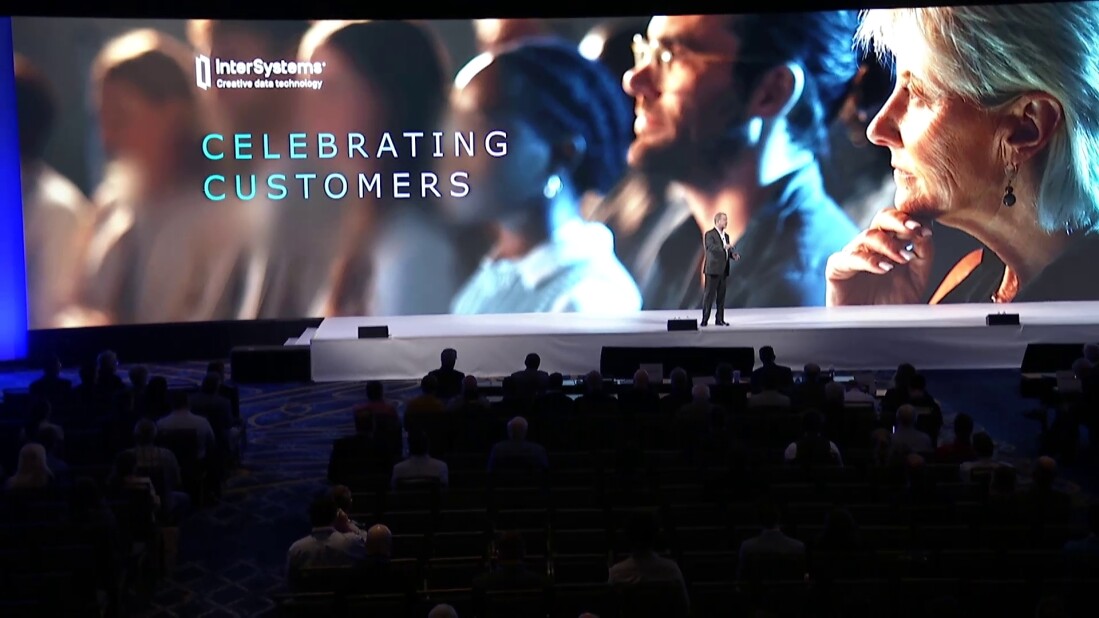
InterSystems READY 2026, select InterSystems clients from around the globe received
InterSystems Impact Awards, after review by an independent panel of MIT judges. Winners were nominated, then competed in six categories (health plans and health information exchanges/HIEs, healthcare providers, health tech, public sector, supply chain, and financial services. They were judged on three key criteria:
- Make a meaningful difference for people, organisations, and society.
- Break new ground, including through AI and automation.
- Set an example for others to learn from.
Several of the key themes that dominated sessions and talks at READY were reflected in the
innovations that won this year’s Impact Awards.
- Top Theme of the Year: AI That Works
- Moving Up: Digital Modernisation, Interoperability, and Preparing for AI
- Rising Geographic Focus: Rural Health Transformation
Top Theme of the Year: AI That Works
To highlight the burgeoning importance of artificial intelligence (AI) technologies in healthcare and in other areas of InterSystems business, the Impact Awards featured a special seventh category called AI That Works. The final winners in this “bonus” category were drawn from nominees who had won in one of the six main categories. This category’s nominees tell the big story: AI is moving beyond experimentation and into application.
AI That Works = AI Now
The essence of AI That Works is exactly that: AI is up, running, and already contributing to the success of the winners, rather than being a new level of future enhancements planned or under preparation. And here, AI includes a range of both recent developments—in particular, vector databases, vector search, and generative, chatbot-like technologies built on them—and older, more established forms such as machine learning, all built on InterSystems IRIS, InterSystems IRIS for Health, and other technologies, such as InterSystems HealthShare and Unified Care Record.
Across the winners, a common theme emerged: organisations are using AI not simply to automate tasks, but to rethink how healthcare, financial services, supply chain, public, and other services can be delivered. More than a theme, AI is woven through many of this year’s projects.
- More than half of the submissions, including many of the winners, used AI to solve serious healthcare and other challenges, from reducing administrative burden to improving decision-making.
- Across these projects, AI is helping teams analyse data faster, automate routine tasks, identify patterns, and make more informed decisions.
- The solutions span a wide range: AI assistants, clinical workflow automation, medical image analysis, and digital health data sandboxes that accelerate research and innovation. In many cases, AI is not only driving innovation directly—it is providing the tools and platforms that make future innovation possible.
- At the same time, light is cast on the questions surrounding the privacy, security, and ethical use of personal data in AI.
Seeding Future Innovation with Digital Healthcare Data Sandboxes
Some are building the foundations for the next generation of innovation. In the Middle East, Dubai Health Authority and Assuta Ashdod Hospital are creating digital health data sandboxes that allow researchers and innovators to safely explore new ideas, accelerating discovery while maintaining trust and governance.
Managing Healthcare with AI-Assisted Planning and Sharing
- In Chile, GesNova Salud’s SITGEQ platform is helping clinicians plan surgeries more effectively, bringing advanced intelligence directly into patient care.
- In the United States, MedAllies, a Centauri Health Solutions company, is using AI to make health information more accessible and actionable, helping organisations share and interpret data more efficiently.
Transforming Public Services Through AI
Beyond healthcare delivery, AI is also transforming public services.
- In Brazil, Facilit Tecnologia’s Target Platform helps the State of Sergipe improve public governance and decision-making.
- In Japan, KYOCERA Communication Systems is using AI-powered SHELF EYE technology to modernise library management.
- In the United States, the Social Security Administration is leveraging interoperable healthcare data and AI to streamline disability determinations and improve delivery of benefits.
AI That Works: Winners with Contrasting Approaches
The winners of the AI That Works category illustrate the theme in two contrasting ways.
- The Assuta Medical Sandbox of Assuta Ashdod Hospital (Israel) enables hospital partners to validate medical innovations with anonymised clinical data while strengthening the hospital’s own digital and research capacities. Innovative spinoffs like BloodGPT and TailorPath enhance personalised diagnostics and care.
- The PRISMA initiative of UC CHRISTUS (Chile) powers ambient listening of physician-patient conversations with AI, automating and improving clinical documentation and reducing administrative burden.
The winners and all the nominees demonstrate the diverse and impactful ways AI is being used to improve efficiency, accuracy, and outcomes, with a strong focus on automation, real-time insights, and user-centric solutions. Whether supporting clinicians, researchers, public servants, or citizens, these initiatives demonstrate how intelligent technologies are beginning to reshape the way critical services are delivered.
Moving Up: Digital Modernisation, Interoperability, and Preparing for AI
For our clients, taking advantage of AI in the near future, if they are not already, requires a substantial upfront investment in their data estates through digital modernisation: upgrading or migrating from older systems and applications, and consolidating tools and data sprawl. Even without considering AI, the sheer demands being put upon today’s data systems compared to even a few years ago makes frequent modernisation imperative. Migration is now a way of life.
A significant group within the Impact Awards nominees and winners exemplifies the major advantages that come with such modernisation and represent digital modernisation at its best. Beyond simple modernisation of systems, the major advantages of adopting automated and interoperable data exchange stand out in these innovations, areas where InterSystems technology has long played an exceptional role.
From Legacy Silos to Modern Connectivity and Performance
The digital modernisation in the innovations of these winners—including
Chadwicks Group, Matrix, the
U.S. Social Security Administration,
Tuscany Regional Health Service, and
ZORGI—centred on transforming legacy systems into modern, interoperable, AI-ready platforms. The winners:
- Upgraded their core systems to greater accessibility and usability.
- Migrated to modular and user-focused architectures.
- Consolidated operations through approaches like dual-system, single-database setups.
InterSystems IRIS and related technologies played a key role. These efforts resulted in streamlined operations, improved productivity, enhanced compliance, and readiness for future AI-driven enhancements, all while minimizing business disruption and maintaining continuous service.
Upgrades and Migrations—Without Disruption
Ireland’s Chadwicks Group and Israel’s Matrix exemplify the theme of non-disruptive digital modernisation through comprehensive systems upgrade, migration, and consolidation.
- Chadwicks Group modernised its Enterprise Resource Planning (ERP) system into a cloud-native, user-centric, and AI-ready platform, streamlining operations and enabling rapid expansion and compliance.
- Matrix migrated its legacy ERP to a distributed SaaS model, consolidating financial operations for high performance and scalability, making Matrix more prepared to help its clients in their own digital transformations.
Both companies leveraged InterSystems IRIS to achieve real-time data access, operational efficiency, and future readiness for AI-driven enhancements, setting new standards for digital transformation.
Rising Geographic Focus: Rural Health Transformation
Another major theme of READY 2026 was rural health transformation, improving the access to and quality of care available to patients not living in or near metropolitan areas. The work of two of 2026’s Impact Awards U.S. winners, Georgia Health Information Network (GaHIN) and Blue Cross & Blue Shield of Mississippi (BCBS MS), overlaps with this theme. But the theme’s relevance extends more widely—to other parts of the U.S., Australia, the United Kingdom, parts of Europe, and elsewhere.
Facing the Limitations of Rural Healthcare
Three primary challenges confront rural healthcare: fragmentation of care, workforce shortages, and limited access to speciality services. Fragmentation arises when patients see multiple independent providers without shared data and coordination, leading to gaps in care, missed referrals, and duplication and other inefficiencies. Workforce shortages exacerbate these challenges, as rural areas struggle to recruit and retain healthcare professionals, making it difficult to deliver consistent, high-quality care. And rural patients often face long travel distances and limited access to specialists, which delays timely treatments and follow-ups. Together, these challenges contribute to poorer health outcomes and place additional strain on rural health systems.
To the Rescue: The Right Technology, Deployed the Right Way
Technology can address these obstacles. A shared, interoperable data infrastructure, such as InterSystems Regional Health Connections, is foundational, accepting data from diverse sources to create unified patient records, allowing real-time collaboration among care teams, and facilitating integrated workflows. HIEs, artificial intelligence (AI), and clinical decision support and similar tools are critical enablers, providing clinicians and patients with real-time data access and actionable insights. These tools reduce unnecessary referrals, support primary care clinicians, and improve care coordination, especially vital in areas with limited specialist availability.
A More Comprehensive Meaning to Healthcare
As an aspect of their winning innovations, GaHIN and BCBS MS point toward gains from digital modernisation in a rural context: integration of behavioural and social care, expansion of interoperability beyond medical data, population-level analytics, and AI-driven insights that support comprehensive care and informed decision-making. By leveraging these technologies and strategies, rural healthcare can overcome its challenges. Ultimately, these efforts aim to improve outcomes and create more sustainable healthcare delivery for rural communities.
Watch Winners and Themes from READY 2026
For more about this year’s READY themes and the Impact Award winners, try these recorded videos:
- Building the AI Digital Backbone: InterSystems Vision
- Data to Decision: Building Scalable AI through Interoperability
- Healthcare's High-Performance Frontier: Building Effective Human-AI Systems
- Keynote Presentation: Healthcare at the Edge (panel discussion)
- Conference Session: Connect Rural Care (solution overview)
- Impact Awards: Insights on Corporate Innovation